
My grand father, Sultan Noorani was a devout Ismaili. He would wake up at 4 am to pray at the Jamaat Khana.
I grew up Christian but somehow we always tried to keep the cultural side of the Ismaili religion. My father spoke some Kutchi to us, the language spoken in Kutch or rather the dialect. We also attended some cultural nights at the mosque, like today, the birthday of the Aga Khan, the descendant of the prophet Muhammad according to Ismailis.
Being a child of two different faiths, you have no choice but to try to understand and accept both beliefs and the people that believe them. In the end, it does make you undecided and unsure which is the correct path. Instead, you try to accept both as versions of one truth, one God. But maybe that is a lie, that there is only faith that is the correct one. In any case, I am proud to be part of two cultures.
Ismailis have a good sense of community and values to make the world a better place, so do Christians. I wish both communities peace and prosperity.
If you’re interested in our history, read about our family’s history in Congo.
My grandmother, Dolat Kassam, (also an Ismaili) was born and grew up in Zanzibar and has great memories of her childhood there by the beach. We always dreamed to take her back there one day to see Stonetown and find the house she lived in and the Jamaat Khana she would go to with her family and friends. She is now in UK and travelling there now would be very difficult.
“On 12 October 2026, Ismailis around the world will celebrate Mawlana Hazar Imam’s 55th birthday — an occasion to reflect on the unique spiritual bond that links each murid to the Imam-of-the-Time.” https://the.ismaili/salgirah
According to ChatGPT AI, here are some details about the history of the Ismailis in Congo Kinshasa.
“The Ismaili community has roots going back more than a century. Its history involves migration through East Africa, commercial settlement, community institutions, departures during political upheaval, and later returns. The published record is scattered, so some details depend on community accounts and family memories.
Here is the outline I could substantiate:
- Early 1900s: arrival through East Africa. A historical account published by The Ismaili traces early settlers through ports such as Dar es Salaam to Albertville, now Kalemie, on Lake Tanganyika. From there, some established themselves farther inland, including in Stanleyville, now Kisangani. It gives an approximate period, rather than a verified first arrival. Paderborner ‘SJ’ Blog
- By the late 1940s: a growing presence in Léopoldville, now Kinshasa. Families worked in imports, commodity exports, wholesale and retail. The community’s geography gradually extended from eastern trading centres to the capital. Paderborner ‘SJ’ Blog
- An organised community developed around its religious and social institutions. A historical account reproduced in a family-history article identifies the Territorial Council presidents as Vazir Abdulsultan Pirbhai Kassam, from its inception until 1966; Rai Shamshudin Ahmed, from 1966 to 1971; and Sultan Noorani, beginning in 1971. That last date records the start of his presidency, without establishing its eventual end. Emilio in Congo (DRC)
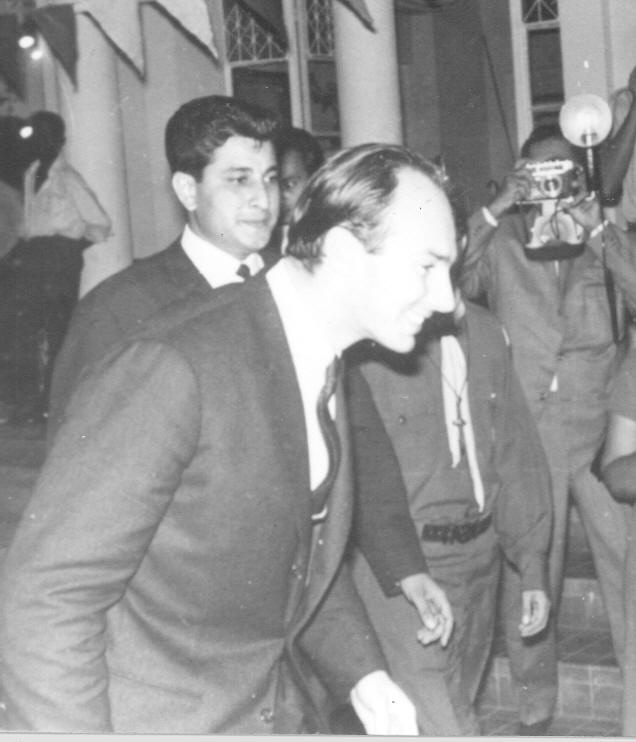
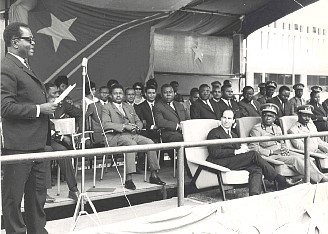
- 1966: Aga Khan IV visited Léopoldville. An Ismaili historical chronology records his involvement in the foundation ceremony for the Industrial Promotion Services (IPS) building, alongside President Mobutu. This connects the community’s history with broader industrial-development initiatives. The chronology has inconsistent January dates, so I would verify the exact day before using it in a formal history. ismaili.net
- The 1970s brought significant departures. The community account describes government policies that made continued residence difficult for people of Indian descent, prompting many Ismailis to leave. It also describes subsequent returns and renewed settlement. Paderborner ‘SJ’ Blog
- 16 August 2013: the Kinshasa Jamatkhana and Centre opened. With prayer, education and community facilities, it marked a substantial investment in the community’s future in Congo. Paderborner ‘SJ’ Blog
There is a particularly interesting personal source: a 2022 article on Emilio in Congo, credited to K. Emilio Noorani. It describes Sultanali “Sultan” Noorani and his brothers Badhur and Sadru arriving in the 1950s, alongside family memories of life and departures after independence. A reader, Salim Kara, also recalls his parents settling in Albertville in 1936. These are valuable firsthand leads, although the author explicitly invites corrections.”
Further readings
- https://www.iis.ac.uk/publications-listing/the-ismailis/
- “The Ismaili Imami Shiah Khoja in East Africa Before the Colonial Period” Ismaili.net
- A Short History of Ismailis by Farhad Daftary (Institute of Ismaili Studies) (PDF)
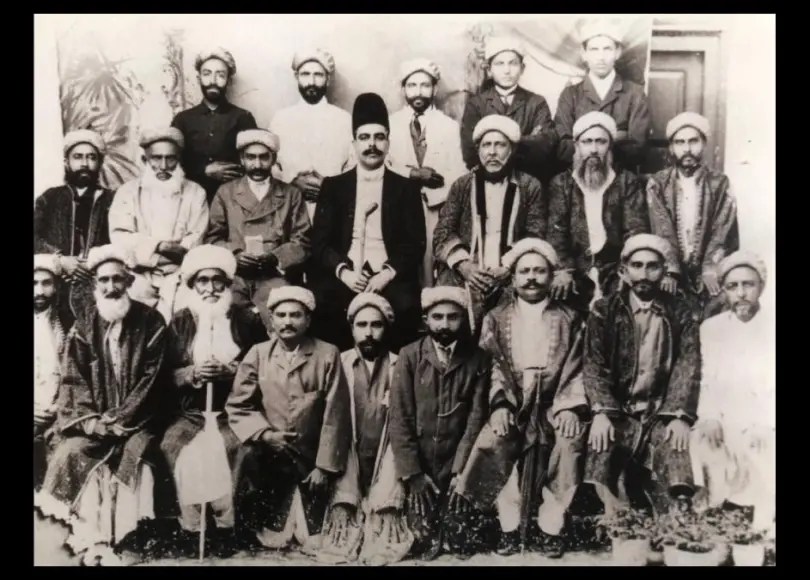
Featured Photo : First Supreme Council for Africa. Left to right : Top, standing: Mohamed Bhanji, Gulamhusein Harji, Sumar Muhamed Rashid Alana, Ali Valli Issa, Gulamhussein Karmali Bhaloo. Middle, seated: Pirmohamed Kanji, Visram Harji, President Vizier Mohamed Rahemtulla Hemani, Imam Sultan Muhammad Shah al-Husayni Aga Khan III, Fazal Essani, Gulamhusien Bhaloo Kurji. Bottom row, seated: Mukhi Rajabali Gangji, Vizier Kassam Damani, Janmohamed Hansraj, Rai Mitha Jessa, Juma Bhagat Ismail, Kamadia (Itmadi) Jiwan Laljee, Salehmohamed Walli Dharsee, Janmohamed Jetha, Kamadia Fazal Shivji. Image: The Ismailis An Illustrated History. Blog : “Early Ismaili settlers of East Africa initially established a foothold in Zanzibar” by Nimira Dewji


Leave a Reply