

Do you want to support the local Congolese economy and local entrepreneurs? Do you want quality food products? Here are a few that I can recommend.
If you know of any that I have not mentioned please let me know!
I have split the list in 2 : 1) Foods and drinks and 2) Arts and crafts (non-food)
1) Food and drinks
a) Jambo Jus

In 2010, two brothers started making fresh fruit juices in an apartment. Now they sell to many local super markets and businesses (such as hotels in plastic and glass bottles). They also have a range of Kivu products (beef, cheese, chocolate that they bring in to Kinshasa regularly).
“The Jambo adventure began at the end of 2010 in an apartment in Kinshasa, before being relocated to a workshop. “My brother is at the base of the project, but I think I’m the one who gave him a first breath of life,” says Laurent, 33. After a stay of a few months in Congo with my father where he had thrown the first stones, he returned to Belgium and did not really follow up. “A training in “business self-management” later, Frédéric lands in the DRC. A return to basics: that’s where the two brothers were born…”
Read the full RFI article (2012)
b) Mannalola honey

Started by Christelle Veringa, she buys locally made honey from high quality farmers and has honey from different types of flowers. Sold in most supermarkets in Kinshasa.
“Created in August 2019, the MannaLola label aims to allow the discovery of quality products from our country, based on honey, throughout the world. The close collaboration we have established with local producers is the key to our success.
We select them according to the quality of their know-how and the realisation of a production of a tasty honey, in strict compliance with health regulations. Since its creation, MannaLola has had a positive social and economic impact for rural communities in the DRC, as they are directly involved in honey production.
Entire families directly benefit from the fruit of their work with us. This strategy creates evolving opportunities and generates revenue, allowing thousands of people to get out of poverty, while reducing the alarming rates of deforestation in the region.”
Read her interview in Mining & Business (2021)
c) Witch’s Remedies
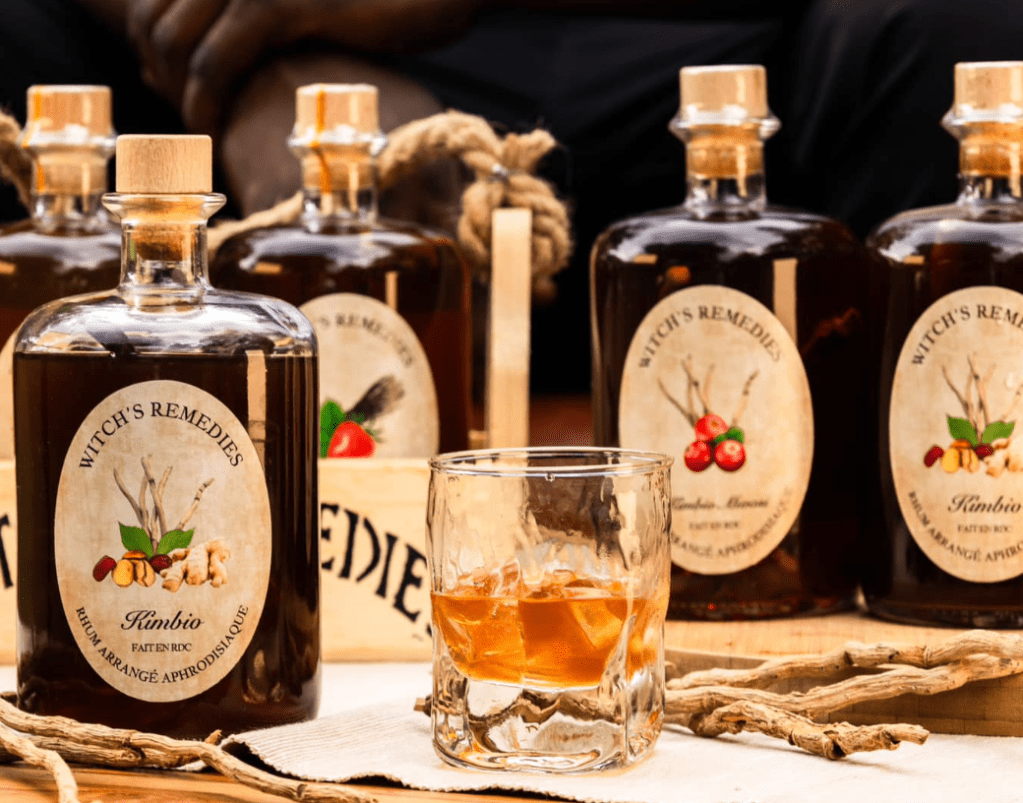
Arranged rhums by Witch’s remedies. A local distillery that makes rhums with vanilla, ginger and many other flavours. It is worth a try. Some are very smooth (vanilla, passion fruit) while others are much stronger (Ginger, Chilis). Based in Lubumbashi (I think).
d) Manitech jams and peanut butter

A Congolese woman started this a few years ago. They faced many challenges but are now producing peanut butter and jams from local produce.
“MANITECH CONGO is an agro-industrial company based in Kinshasa, whose main activity consists of the production of peanut pastes, pili sauces, jams and honey.
The MANITECH CONGO plant, newly built in 2023, includes a complete industrial production unit of peanut paste and a complete production unit of pili sauce production. The jams are strategically produced in the old-fashioned way, in copper caldrons in order to offer customers premium products at competitive prices.
As for honey, it comes straight from the hands of beekeepers’ cooperatives in the Banza-Ngungu region in central Kongo, an agricultural region known for the excellence of its agricultural products before being affectionately wrapped in the sweetness of society.
With an expected annual production of more than 300 tons of finished products each year, it is a growing SME, which has been able to impose its brand, MANITECH, on the Congolese market.”
Translated from French using Apple Translate
e) Jaune Congo, a local organic farm

A local farm outside Kinshasa that delivers their produce straight to your door once a week! I mentioned them in a previous post. They are the only ones producing that I know of that grow strawberries!
f) Eyano Ya Bokoli, a local tea producer
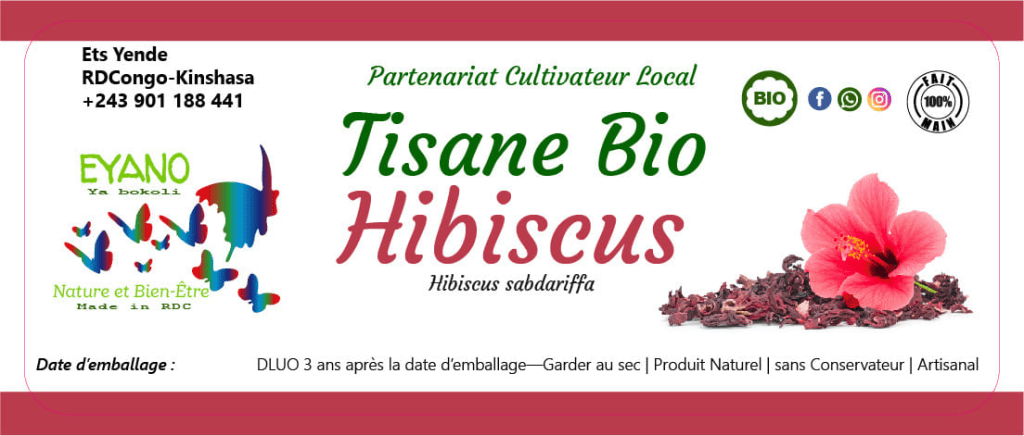
They make a good hibiscus 🌺 tea and have little gift bags for friends and clients. All organic produce.
g) Le Choix de Nadine, a classic local jam producer
Website – Facebook – Instagram
Unless I am mistaken, they are one of the oldest local producers, they make quality jams and chilis started by a lady in her home.
h) Virunga Origins Chocolate and Coffee

“Virunga Origins is a social enterprise located in the Democratic Republic of Congo. Our mission is to produce delicious, superior quality goods and create lasting societal change through sustainable agriculture, working practices, training, and employment opportunities.
As part of the larger Virunga National Park family, Virunga Origins also helps to conserve rainforests, biodiversity, and endangered species, such as mountain gorillas, through sales of our locally produced chocolate and other delicacies.” Virunga Origins

Belgium-based, they make good chocolate for the international market. They are a polished brand with an excellent marketing team.
“An Arabica coffee grown in the fertile volcanic lands bordering Virunga National Park. With each cup, you will help create positive change for more than 6,000 coffee farming families, while savoring a distinctive rich and fruity flavored coffee blend.” Virunga Origins
Produced in Mutwanga, DRC.
i) Kivu Cheese

Yes, outside Goma, in the Masisi plains, you can find cheese producers, even now, during the war. The cheeses are also available in most supermarkets.
TV5Monde Documentary on Congolese Cheese
“The history of cheese goes hand in hand with the land conflict that has been gangrene the territory of Masisi since the late 1930s, explains Fidel Bafilemba, a researcher for the NGO Enough Project. In this country of cocagne in the south of the province of North Kivu, land control opposes the Hunde, an “indigenous” community, to the “Banyarwanda”: the Hutu and Tutsi arrived in successive waves from neighbouring Rwanda. From the 1970s, the Tutsi, who now control the cheese sector, gradually acquired land at the expense of the Hunde.
Twenty years later, identity and political disputes exacerbate the conflict. In 1993, interethnic massacres killed several thousand people in a postcard landscape.
At 2,000 metres above sea level, Kilolirwe spreads its cheese factories – modest wooden huts – along the dirt track. Here, the dizzying slopes carefully cultivated between the eucalyptus woods are erased in favour of gentle alpine pastures where local cows (ndama and zebi) and foreign cows (Frisian and Alpine browns) graze.
Goma, capital of North Kivu, is about fifty kilometres to the east, about two and a half hours by car. With about fifteen small breeders, Ernest Kakwiki brings the milk of the morning, manual milking to the Innocent Ntwalabakiga cheese factory. By their high hat with small edges, you can easily recognise Tutsis. Everyone pours the contents of their cannister into the out-of-age bathtub. A wood fire is already lit to heat the water that will be added to the milk and rennet. Without a thermometer, James Hakizi, head of production, says he only has to dip his arms in the mixture “to know if the temperature is good” for the curd, which will be wrung out, moulded and put under a press for the night. After a passage in a brine bath, the balls with flattened tops will be refined for about three weeks. Result: a half-cooked pressed dough of one kilo with a yellow-brown crust, close to some abbey cheeses.
This so-called Kivu or Masisi cheese is sold for around 3 dollars a piece by producers. It can be found in Goma for 4 or 5 dollars, and three or four times more in Kinshasa, on the other side of the country, making it a luxury product. When he started keeping cows in 1971, Mr. Kakwiki was 13 years old. At the time, he says, “milk was only for drinking with the family”. Cheese was then a matter of Europeans: three large Italian owners in the area. These left when the dictator Mobutu Sese Seko confiscated all foreign companies, recalls Mr. Kakwiki, and the people of Kilolirwe began to produce cheese themselves in the years 1975-1980.
The know-how is transmitted by a Belgian Catholic missionary more accustomed to workwear than ecclesiastical clothing, Father Roger Carbonez, who had founded a school farm in Lushebere shortly after independence (1960), not far from there. The rise in milk demand for cheese factories allows Mr. Kakwiki to thrive to own 35 cattle. After the 1993 massacres, the Tutsi of the Masisi fled en masse to Rwanda. But the worst is yet to come: from 1996 to 2003, two regional wars ravaged Kivu, which today remains torn apart by the violence of armed groups.
Like so many farms, the Lushebere farm is completely looted and its 2,000 or so cows are killed. Returning to Belgium for his old age, Father Carbonez will die of an attack when he heard the news, says Father Benjamin Barumi, general economist of the Diocese of Goma. From 1993 to 2003, milk and cheese production stopped completely. It only resumes with the return of refugees. In charge of relaunching Lushebere, Father Barumi explains that he started “with 50 cows”. Today, the farm has 420, produces 50 cheeses per day. At 26, Mr. Ntwalabakiga employs three people and produces an average of 22 cheeses per day, which ensures him a monthly profit of $150 to 200: “enough to feed a family”. According to the authorities in Masisi, 120 tons of cheese were produced in 2012, a turnover of about $360,000 for producers, and the trend is upward.
Despite the instability, “a lot of cheese factories are created,” says Mr. Hakizi. At the age of 22, he soon intends to make way for his apprentice to train other young people elsewhere.”
(Translated from French using Apple Translator)
Le Soir (Belgian newspaper) (2014)
j) La Kinoise, coffee grown near Kinshasa
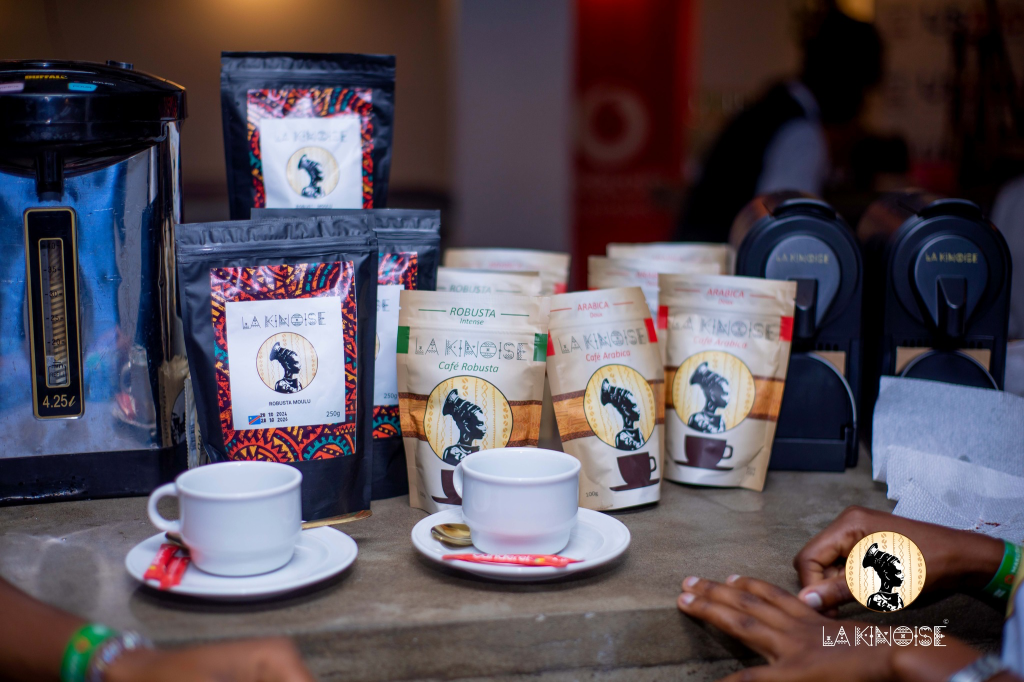
“Since their creation by Tisya MUKUNA, La Kinoise aims to be a large coffee plantation in Kinshasa.
Their plantation is located in the municipality of Mont Ngafula city of Kinshasa.
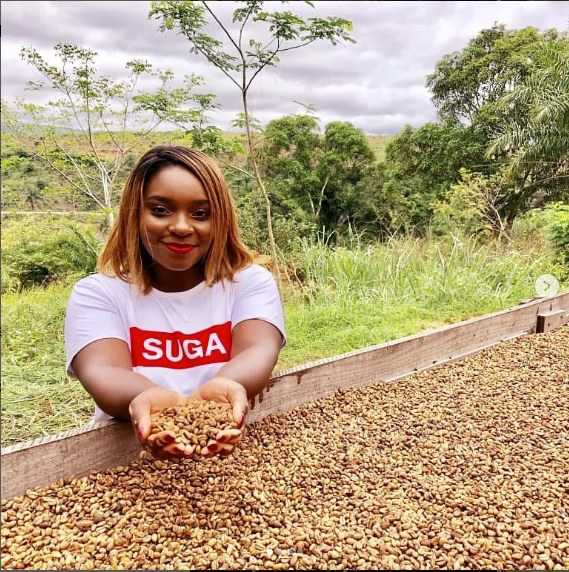
The region, reputed to be impossible to cultivate coffee, did not stop the team of La Kinoise to take up the bet.
Agricultural activity has allowed the inhabitants of neighbouring villages to access decent work, training and thus revive the local economy.”
k) Domaine des 4 Vents

Facebook – Instagram – Website
It is a farm after Maluku that had been created a few years ago. The owners have faced many challenges, including being in the middle of a conflict between tribes (Teke vs Yaka) about stolen land.
They have been able to rebuild and the area is safer these days. You can buy their products directly or in the local super markets (SK, Citymarket, Kinmarché, etc…).
They have a range of products :
- Smoked chicken
- Pili pili or chili powder
- Fruits and vegetables
- Oil
- Manioc flour
- Biltong
- And many more… (See their Facebook page)
l) Kawa Kivu, coffee
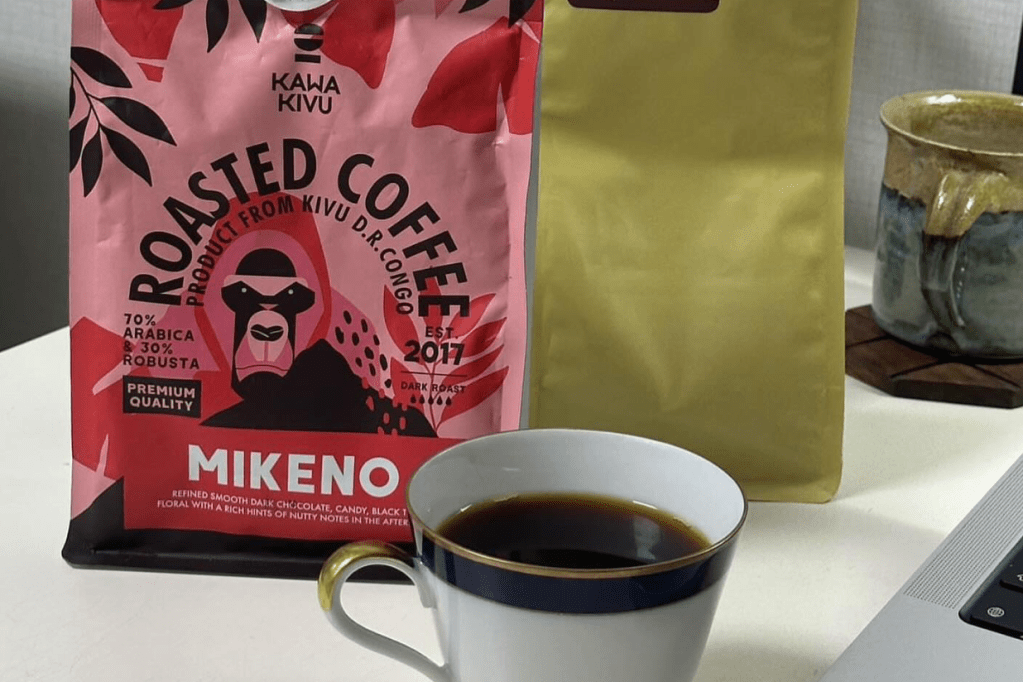
“Our coffee is sourced from the volcanic shores of lake Kivu directly from farming communities. We select only the finest red cherries before undergoing wet fermentation for 18h in order to ensure the unique taste of the land.” Packaging of Kawa Kivu.
Instagram – Facebook – kawakivu@gmail.com
m) Kwilu Rhum

“The company was founded in 1925 in Kwilu-Ngongo (which was then named Moerbeke) in the Belgian Congo as a subsidiary of the Belgian company Moerbeke. The Finasucre conglomerate was created in 1929 to manage the properties of Moerbeke and Escanaffles.
With Zairianisation, the Sugar Company and the Société de sucrerie et raffinerie Centre Afrique (SUCRA) were nationalised in 1974.
In 1986 Finasucre bought the Sogesucre conglomerate, which then owned the Sugar Company, and created the Sucrier Group by merging it with the Moerbeke and Frasnes sugar factories in 1989.” Wikipedia
Fun fact : In the 2010s, there was a famous bar in Kinshasa called Kwilu Bar.
n) Locations
For more local products, go to local markets or try Patisserie Nouvelle near Utexafrica or Eric Kayser or Texaf Bilembo (art gallery/environmental center). You will find many other products made in the Democratic Republic of the Congo.
In front of SK Market on Justice, you can get fruits and vegetables at a premium “foreigner” price. If you’re brave, go to Zigida or Marché Central or ask a local to help you negotiate.
2) Arts and crafts
a) Le Miel Design, a local furniture shop

A vintage locally made minimal furniture shop that has South East Asian influences.
b) “Marché Des Valeurs”, a local arts and crafts market

The Market of Value or “Marché des Valeurs” is an old but gold arts and craft market near the Place Royale. There are many artists there that sell Congolese and foreign art and souvenirs. They have art work, sculptures, malachite bracelets, Tintin-type art and statuettes, etc…
There has been a significant investment to make it cleaner and more organised. It has improved a lot. It is easier to see the various stands and products. I highly recommend going there once at least!
Get ready to negotiate a lot – Usually they start very high. Try to drop it to 50% maybe even 25% of the asking price.
c) Symphonie Des Arts, local arts and craft

“A place dedicated to Congolese art for more than 50 years, with a tropical garden, dotted with peacoks, flowers, and works of art”.
Mama Christa (pictured here) is the owner and continues the tradition of curating incredible local art.
About Symphonie des Arts (French)
d) Pop-up markets
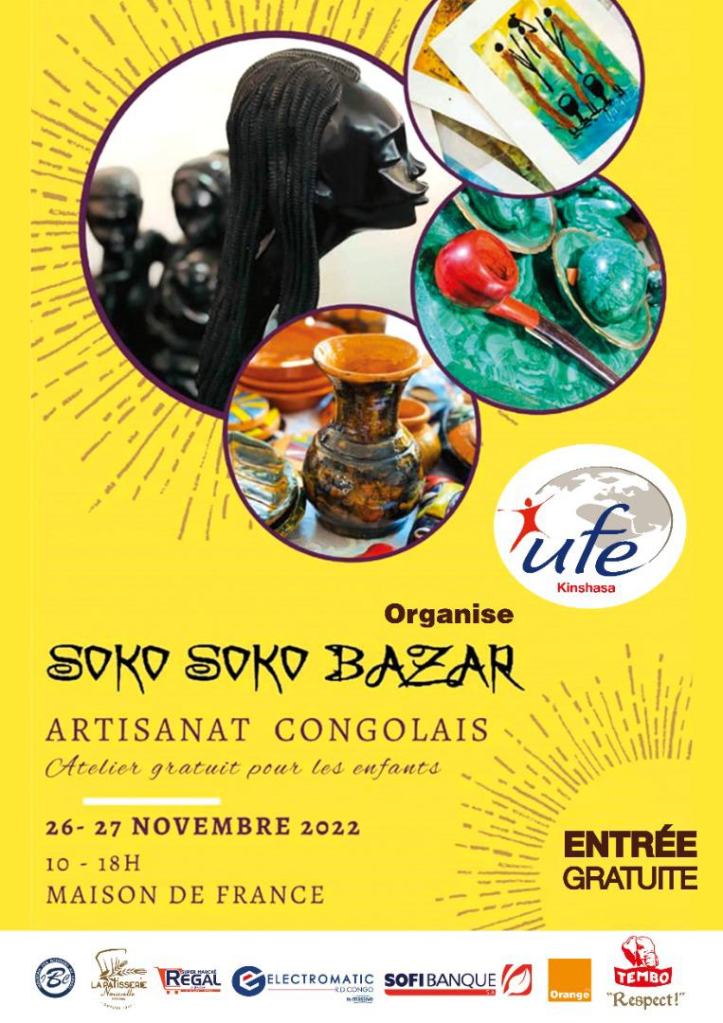

There are also many local markets where other small producers come to sell their products.
Usually in the summer and in December there are small markets organised by schools (American , French, Belgian, etc…), hotels (ie Pullman) and other associations (French Institute, Maison de France). Try to go to one of these.
 Emilio in Congo (DRC)
Leave a comment