

What is it like to work in the DRC in 2024? Are you thinking of living or moving here? What are expenses like? What kind of life will you have? Read on to find out.
First of all, it depends where you will live, the kind of money you will make, the type of work, etc…
Life in Kinshasa, Lubumbashi and perhaps Goma can come close to a normal life. In other smaller cities, it will definitely be more of a shock.
Let us start with the “easiest” and likeliest place you will start your adventure, the capital Kinshasa.
Visa
Just to get a visa to visit will be a long and painful process, I am told. In your home country, you will need all sorts of papers to get that first visa, including an invitation letter. If you want a work visa or long term visas for your partner and kids, then your company should try to arrange it for you. The DRC embassy will probably make it a bit hard. I’ve heard stories of months of waiting and backs and forths to get the visas. Get ready for that!
Housing
Anyways, let’s say you do get the visa (congrats!). Now it’s time to check out your workplace and environment.
Just setting up a “normal” life requires a few things :
- A place to stay : in Kinshasa you can expect to pay 500 USD (room) to 4000 USD per month for rent in a 2 bedroom apartment in Gombe (the safest, most accessible part of town). If you want villas or bigger places, try Limete or Ma Campagne, but be prepared for 2 or 3 hour traffic to get home after work. The real estate market is booming and heavily overpriced. The most expensive and exclusive place is Utexafrica – there are smaller and larger places, from 2000 to 10 000 EUR but all are inside a huge complex where you can walk and see the Congo River, play tennis, play padel, gym, swim in a large pool and go to a fancy outdoor restaurant and bar.
- To find a place to stay, there are WhatsApp groups (Kin Nights is great) and Facebook pages (this one). There are also rental agents that will ask for 1 month of rent as a commission. Some are good, like this one.
- Make sure the backup power is excellent (an automatic start diesel generator set is a must) and there is 24/7 water – these two things seem obvious, but in most houses, it is not. Landlords will oversell on this… Try not to be in GB or areas with a history of bad grid. Try to be near a presidential residence, important people, embassies, large buildings with stable power but that will cost a lot.
- If you want, you can get a maid or domestic worker to do all the house chores for you.
Transportation
First of all, how will you get to work?
Some people are fearless and will take a taxi (Yango maybe) or the normal yellow ones or even a motorcycle (even if they are illegal in Gombe)!

by Samir Tounsi. Source: Phys.org
You could buy a second-hand car (ideally from someone who you know and has taken good care of the car, maybe your colleagues or boss knows people). You will have to learn to ask for help (a lot!) if you don’t want to waste money and time. Learn to trust the right people who know Kinshasa or the Congo well. Suggestion : Stick to Toyota.
Find a good garage (Japan Motors Africa, LTService, CFAO are examples) to check and service your vehicle. There are many papers that are needed to not get harassed by cops or if you have an accident with (most likely) someone without insurance and isn’t cooperative, such as :
- “Control technique” (only some garages offer it)
- Insurance
- Parking tax
- Provincial tax
- Driver’s license (But all local ones are expired for the moment because the state hasn’t started printing new ones for more than 2 years now! Don’t ask me why! Information accurate as of July 2024)
I also strongly suggest getting a driver or two (for evenings and weekends) if you can afford it or if your company can provide one. They will keep you sane and cost less than all the “fines” the cops will stop you for. They will also be your most important guide in the chaos traffic.
Use Google Maps at your own peril…
On Saturdays and Sundays, you could drive alone but not too far (stay in Gombe). At night, it is quiet at least but watch out for those drunk drivers and potholes and dodgy neighborhoods like Pakadjuma where supposedly prostitution and crime is prevalent.
Further reading : Beyond Desperation: The Harsh Reality of Survival and Prostitution in Kinshasa’s Pakadjuma – Moretoherstory.org (2024)
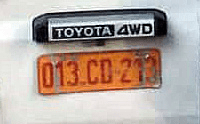
Some people go for long road trips but their companies give them red/yellow diplomatic number plates that protect them from police stopping them.
Work
Now, let’s talk about the work. Here is what you can expect from my experience (10 years in the DRC).
- Micromanagement is the common approach here. If you are very chill and trust people to do their jobs, you will be surprised that it won’t get done unless you remind and check on a daily basis. Sadly, putting pressure is the best way to get something done ASAP.
- Every thing you need or ask to be done needs to be double or triple checked. You can ask for a simple task, but somehow it is not understood properly. For example, instead of asking for 3 staplers from the shop, you are given 30.
- Internet will be unreliable. Do not expect your online meeting to go well. The power might also get cut! Noise and cuts will always happen! You could try using CanalBox as an ISP.
- When dealing with money, most people will ask for a receipt and always count the money left at the end of the day before reconciling. You also have to be good at mathematics as you can pay for something in US dollars but get the change in Congolese francs (FC) where 1 USD is 2850 FC (in July 2024). Always agree on the exchange rate before paying. If you want to save a bit, pay in FC with a low exchange rate and change to USD at an even better rate. If getting paid, try to get USD as the FC can devaluate fast.
- Teach customer service every day. Smiling and greeting customers nicely and in a friendly way is sometimes hard to teach as a lot of people don’t sleep well and are very tired the whole day. Someone once told me he was paid to COME to work but not TO WORK!
- The same can be said about customers. Some will be friendly and respectful, others will think they are God’s gift to you and that you must be at their beck and call 24/7 and treat them as royalty. “Yes boss”, “No problem” and “Free of course?”. Courteous and friendly behaviour is not always a given here.
- Things take time to get done. Administration is very important and not digital at all. Not everyone has WhatsApp or a smartphone or even airtime to call you! Most government offices and companies will ask for letters to be written for anything to get done. Don’t bother saying things verbally, it will be forgotten.
- Things are overpriced. Do you need a laptop? Buy it overseas. You will pay 20 to 50% more in the DRC. Ink cartridges? Maybe you will pay 100 USD but they might not be original ones.
- Do not travel to meetings during the day, you will waste 2 to 3 hours in traffic! Try to make them very early or online.
- It is rare that someone is on time and they will not inform you that they will be late. Punctuality and answering phones urgently is extremely rare – do not expect it unless you know the person well.
- Get to important meetings 1 hour early : airport, meeting, etc… You have no idea what could delay you (traffic???) – Always call ahead to make sure you are expected or the meeting is confirmed
- It is always better to get in the door of a business via someone you know. Cold calling doesn’t always work.
- In Kinshasa, reputation and relationships are (almost) everything. If you know someone or if you try to get to know someone in a business, you are more likely to get that business. Of course, quality and value for money are also important.
- Hierarchy and titles are very important : “Monsieur le Directeur”, “Madame la Directrice”, “Son Excellence”, “Honorable”, etc… You could be disrespecting someone by being too informal too soon.
- Kindness, politeness and small talk are also important but some people will get straight to business (not too likely). Most people will want to get to know you and be your friend.
- If you are an employer, be ready for a lot more hassles than an employee! Such as:
- Taxes, taxes and taxes! Lots of them! Read this guide by the World Bank on doing business in the DRC and this article about corruption and taxes in artisanal gold mining.
- Crooks and frauds will come to your office to harrass you for money, taxes and penalties every single day
- Handicapped and other forgotten groups of local society will come weekly if not daily for donations/help and even make a scene (yelling) until they get some money
- Staff will ask for advances or help for their personal problems every week (a death in the family, a marriage, a birth, medical bills, etc…)
- Theft of smartphones or laptops, or damage to company assets (cars, tools, etc…) is very common when using public transport – Things don’t seem last long in the DRC. A brand new car can start having issues a week after it is in use!
- “The exceptional complexity of the Congolese tax system creates incentives for corruption and abuse of power, harming the business environment.” Technical Assistance Report on Corruption and Governance by the International Monetary Fund (2021).

Corruption or “café”?
You will be asked for bribes or “café” on a daily basis!
The DRC has a massive corruption problem that is being addressed at all levels but sadly it is still part of everyday life to the extent that it is arguably part of the culture!
From tax officers to police to security guards, from the little “Mille francs” (50 US cents) given to the police man for his “café” to the millions stolen on large mining deals, corruption and bribes are everywhere and you cannot escape it. If you do manage to never pay off an officer for an illegal fine, you would have wasted hours if not days.
There are signs that it is changing but if you drive around the city or the country, people in power try (gently or aggressively) to take some money off the foreigner. Even a kid in a village will see a non-black and say “Pesa mbongo” or “Give me money” in Lingala.
Fun fact : There is actually a book on Amazon with that title by someone who came to the DRC!

Security
Is it safe to work in the DRC?
Having been part of a family business that has been in the DRC, Zaire and the Ex-Belgian Congo since the 1950s (read our history here and here), I can say that it depends. Here are some security issues :
- Unstable political situation (War in the east – rebels)
- Risk levels are high (so are the rewards/margins!)
- Theft and fraud risks are high
- Petty theft in Kinshasa if you are walking (day and more so at night)
- War zones and rebels presence in some area make access impossible
- Extreme poverty makes crime the only option for some
- Military and people in power can change quickly (1990s military riots) and so can governments
- Business climate can be anti-investment ie nationalisation (1970s)
- Taxes and corruption can be extreme : companies have left or found local partners to do the dirty work (dealing with authorities, police, courts, etc…)
All in all, if you are a “vyapari” (Hindi for businessman), the Congo can be a land of opportunity. If you do things by the book and want to follow the rules, things will be very hard for you as your competition might not play by the same rules! You will need to be shwred and business-minded to survive here. But also be a good and kind person who can be a loyal friend, employer and fair partner to your customers and not cheat them.
I guess it is like business everywhere but maybe the risks are higher but so are the rewards.
I am lucky to have had business people around me to learn from and keep me on my toes.
Arguably, part of the success we had was due to being part of an entrepreneurial community of Ismaili businessmen. (See paper “‘Our ancestors taught us the business know-how in Africa’: Continuity and Innovation in Ismaili Transnational Business Culture” by Susana Salvaterra Trovão et Filomena Batoréu))
“Through a comparison between transnational business practices of Ismaili Muslim settled in the British and Portuguese colonial territories of East Africa and in contemporary Angola, we aim to discuss the impact of colonial experiences in the reconfiguration of postcolonial migrant entrepreneurial cultures. Articulating several guiding empirical questions, we will attempt to show that the continuing centrality in the (politico-economic, relational, and cultural) logic of the particular nation-state in which Ismaili business activities are embedded, the notion of a disadvantageous network closure, concomitant with the importance of face-to-face contacts, the mutual trust and understanding sustained through personal relations, and the tendency for national loyalty to prevail over religious belonging (whenever any potential conflict between the two exists) constitute crucial dimensions of an accumulated tacit knowledge (functional, behavioural, identitarian) which is significant in the analysis of the Ismaili competitive advantage in different colonial and postcolonial African contexts.” Extract: “‘Our ancestors taught us the business know-how in Africa’: Continuity and Innovation in Ismaili Transnational Business Culture” by Susana Salvaterra Trovão et Filomena Batoréu) (2017)
Some were even better at it but somehow got unlucky lost everything and did not manage to stay in the DRC. The Congo has given fortunes to people but also made some of them even poorer.
There are some success stories like Moïse Katumbi, the Ledya group founded by Jean Lengo Dia-Ndinga, the Rawji group or the Forrest Group, but I think 90% closed down and left the DRC for good with a bad taste in their mouths.
Maybe the Congo is like a casino. Inevitably, the house always wins!
What do you think of working in the Congo? Would you try it?
 Emilio in Congo (DRC)
Leave a comment